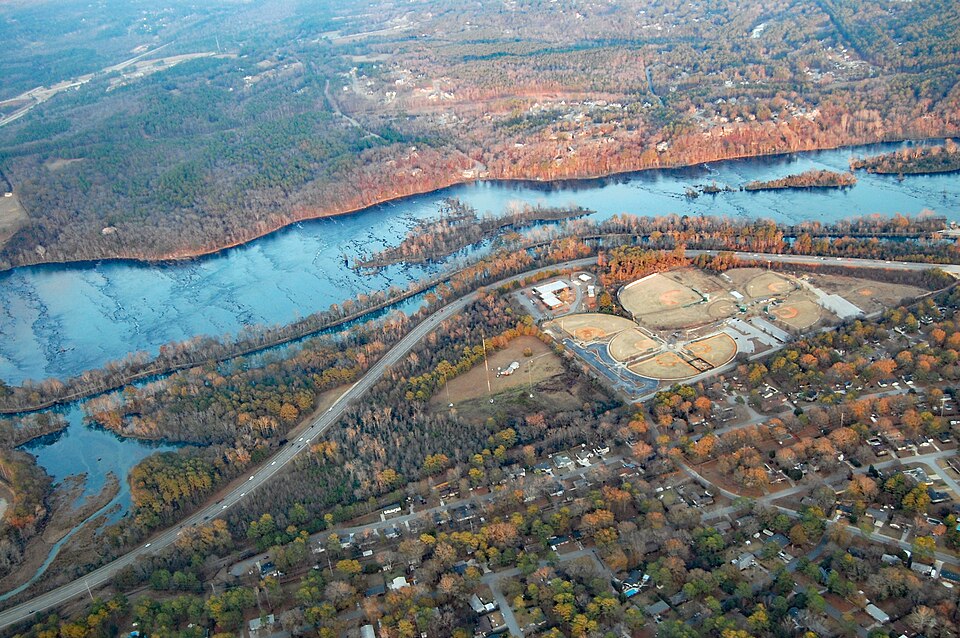
From a colonial trading post on the Savannah River to one of the South's most dynamic cities — Augusta's story is one of grit, reinvention, culture, and the kind of stubborn forward momentum that defines a place worth calling home.
"Augusta is not a footnote city. It is a chapter city — one whose story touches the American Revolution, the Industrial Age, the Civil Rights era, and the most recognized golf tournament on earth. Peak is honored to call it home."
Public domain and openly licensed photographs from the Library of Congress, Wikimedia Commons, and the Georgia Archives — Augusta across three centuries.
Nearly three centuries of determination, industry, culture, and community — Augusta has never been a passive city. It has always moved forward.
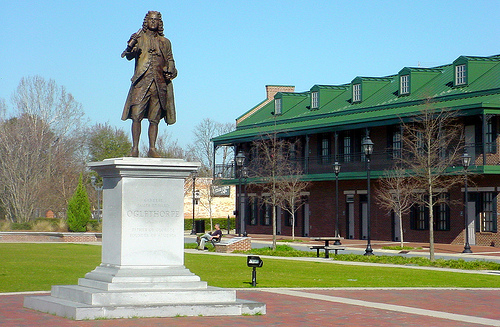
Augusta was established in 1736 by James Oglethorpe — the same visionary who founded Savannah three years earlier — as a frontier trading post at the fall line of the Savannah River. Named for Princess Augusta of Saxe-Gotha, mother of King George III, the settlement was positioned at the critical point where river navigation ended and the backcountry began.
That geography was never accidental. Augusta became the gateway to the Cherokee and Creek nations, the crossroads of the colonial fur and deerskin trade, and rapidly grew into the commercial anchor of the Georgia interior. By the time of the American Revolution, it was already Georgia's second most important city — and it would briefly serve as the state capital three times between 1778 and 1796.
The Revolutionary War came directly through Augusta's streets. The city changed hands multiple times between British and Patriot forces. Fort Cornwallis — built by the British at what is now the site of the Augusta Museum of History — was the site of one of the war's most dramatic sieges, ending in Patriot victory under General "Light-Horse Harry" Lee in June 1781.
Augusta, Georgia circa 1780 • Wikimedia Commons
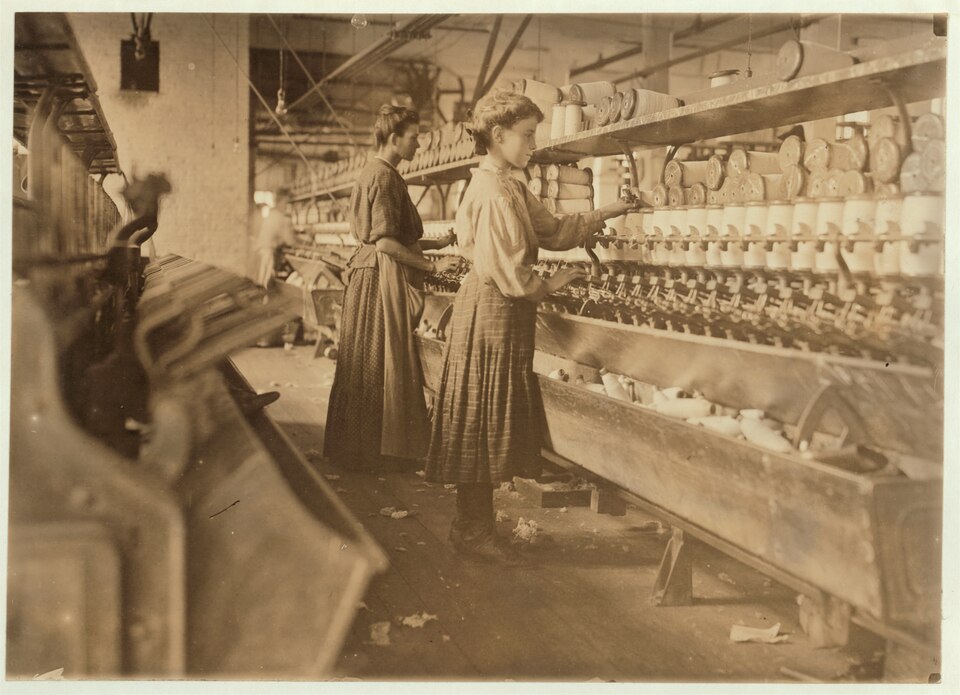
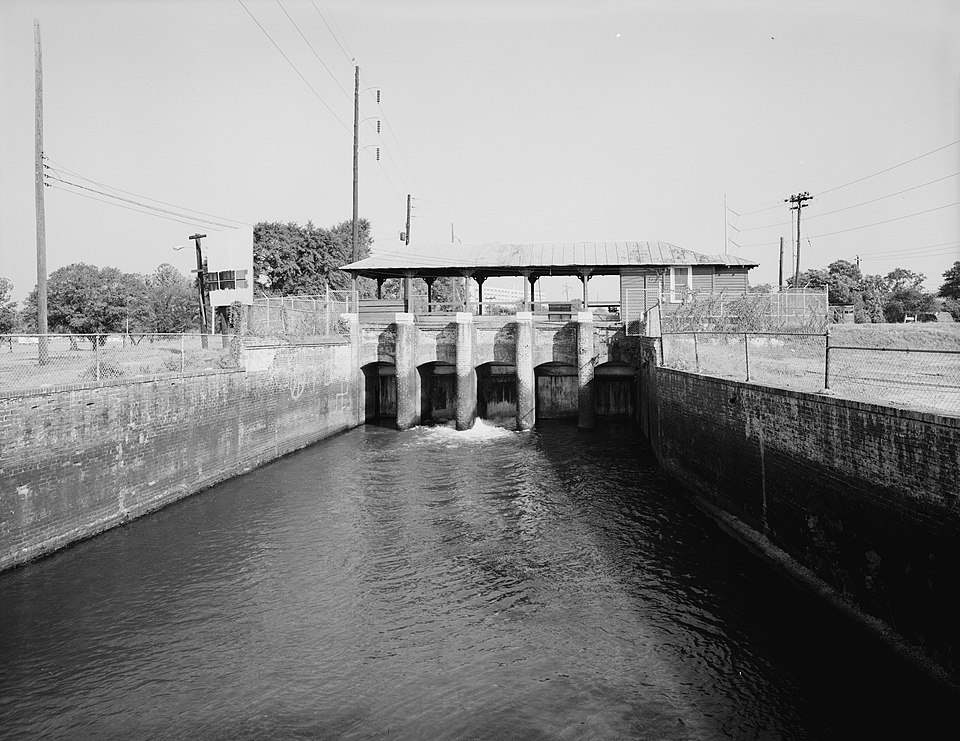
In 1845, Augusta built something that would define it for the next century: the Augusta Canal. Stretching seven miles along the Savannah River, the canal was engineered to harness the river's power for industry — and it worked beyond all expectation.
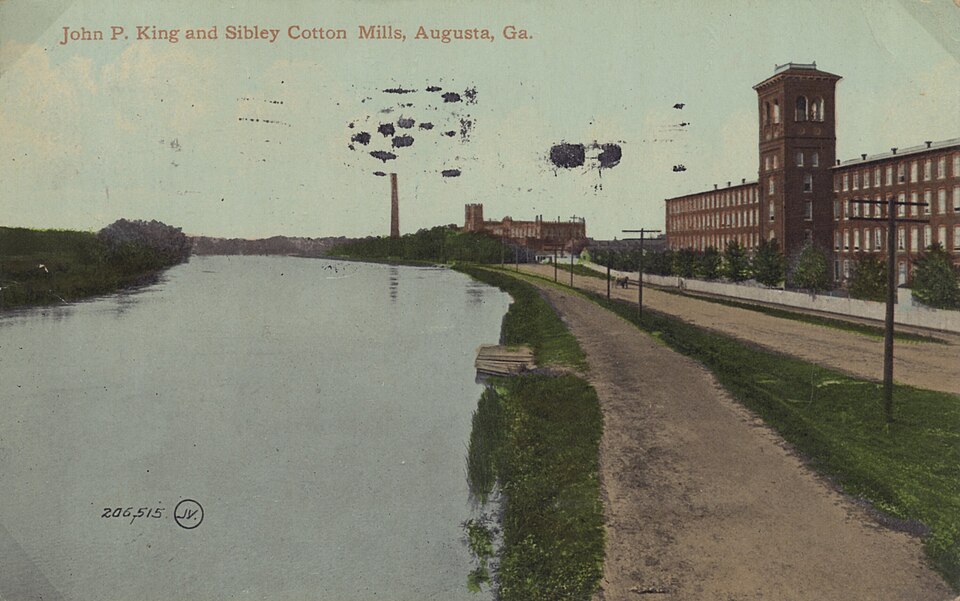
By the 1880s, the canal powered eight textile mills and made Augusta one of the most productive manufacturing centers in the post-Civil War South. The Granite Mill — built shortly after the canal's completion — was the oldest industrial building in Augusta and a symbol of a city that understood the connection between infrastructure and prosperity. The Enterprise Manufacturing Company became the first large-scale mill on the canal and set the template for what followed.
The Augusta Canal today is one of only a handful of surviving industrial canals in the United States and a National Heritage Area. Walking its towpath is walking through one of the most significant chapters of American industrial history — one that happened right here, in Augusta, Georgia.
Globe Cotton Mill, Augusta — January 1909 • Lewis Hine / Library of Congress — Public Domain
Augusta was not burned by Sherman. That fact alone shaped the city's trajectory through the Civil War and its aftermath in ways that still echo today.
During the war, Augusta was home to the Confederate Powder Works — the largest gunpowder factory in the Confederacy, capable of producing seven thousand pounds of powder per day. The factory's Chimney Stack still stands today on the Augusta Canal — the only Confederate monument in the country that is also an industrial monument, preserved as a reminder of what was manufactured here and what that manufacturing meant.
Reconstruction brought both opportunity and violence to Augusta. The city's African American community — which had been central to Augusta's labor economy throughout the antebellum period — began the long and contested work of building political and economic power. Augusta's Black newspapers, churches, and schools during this era formed the institutional foundation for a community that would produce leaders and cultural figures of national significance in the century to come.
Confederate Powder Works Chimney
The only standing structure of the Confederate Powder Works — still visible today along the Augusta Canal. A unique monument to Augusta's role in the Civil War.
Visit Augusta Canal →The twentieth century brought Augusta four things that would define its national and international identity: golf, the military, medicine, and music.
The Masters Tournament was first played at Augusta National Golf Club in 1934, co-founded by Bobby Jones and Clifford Roberts. What began as a regional invitational became the most prestigious golf tournament in the world — and Augusta became, for one week every April, the most watched city on earth.
Fort Gordon — now Fort Eisenhower — was established in 1917 and became the home of the United States Army Signal Corps. It is today one of the most significant military installations in the country, anchoring Augusta's economy and its connection to national security in ways that grow more consequential each decade.
The Medical College of Georgia — established in 1828, one of the oldest medical schools in the South — grew throughout the twentieth century into a full academic health system that now serves the entire region as AU Health. Augusta's medical district is today one of the most concentrated healthcare corridors in the Southeast.
James Brown — born in Barnwell, South Carolina, raised in Augusta — became the Godfather of Soul, one of the most influential musicians in American history, and Augusta's most famous native son. His statue stands on Broad Street. His music shaped every genre that came after him.
Augusta National Golf Club
Home of The Masters since 1934. For one week every April, Augusta becomes the center of the world's attention — and has for over ninety years.
Augusta today is a city in motion — and it is not the restless motion of a place trying to figure out what it wants to be. It is the confident motion of a place that knows exactly where it is going.
The Medical District anchored by AU Health and the Medical College of Georgia is one of the fastest-growing healthcare and research corridors in the Southeast. Fort Eisenhower's cyber and signals intelligence mission makes Augusta one of the most strategically important cities in the country for national security. The Savannah River Site — a few miles south — carries one of the nation's most significant energy and environmental missions.
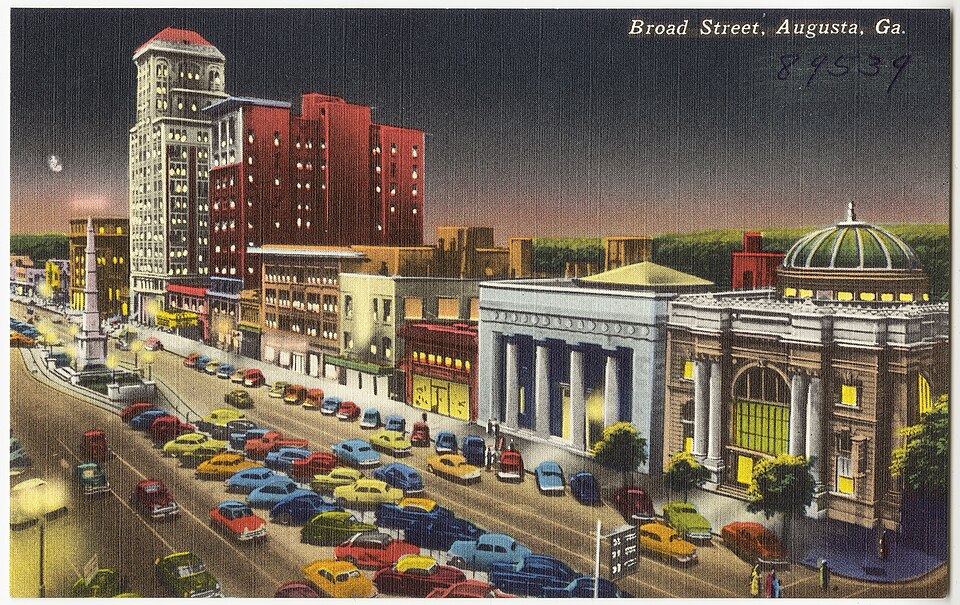
Downtown Augusta is being rebuilt from the ground up — not as a nostalgia project, but as a genuine urban core for the 21st century. The Augusta Common, the River Walk, the arts corridor along Broad Street, and the growing residential and commercial presence in the warehouse district are all part of a city that has decided its center matters again.
Peak Talent Capital Solutions moved its headquarters to downtown Augusta because we believe in what this city is becoming. Not what it was — though that story is extraordinary. What it is becoming. The best chapter of Augusta's story is the one being written right now.
The Augusta Common — the revitalized heart of downtown • CC0 via Unsplash / Wikimedia Commons
Augusta has produced and claimed figures whose influence extends far beyond the CSRA — into American music, law, sport, and culture.
This page will grow over time. If you have historical Augusta photographs, family photos, or contemporary images of the city you'd like to contribute — or if you'd like to point us to a collection — we'd love to hear from you. All free, public domain sources are welcome.